
Lars Reed · 21 September 2026
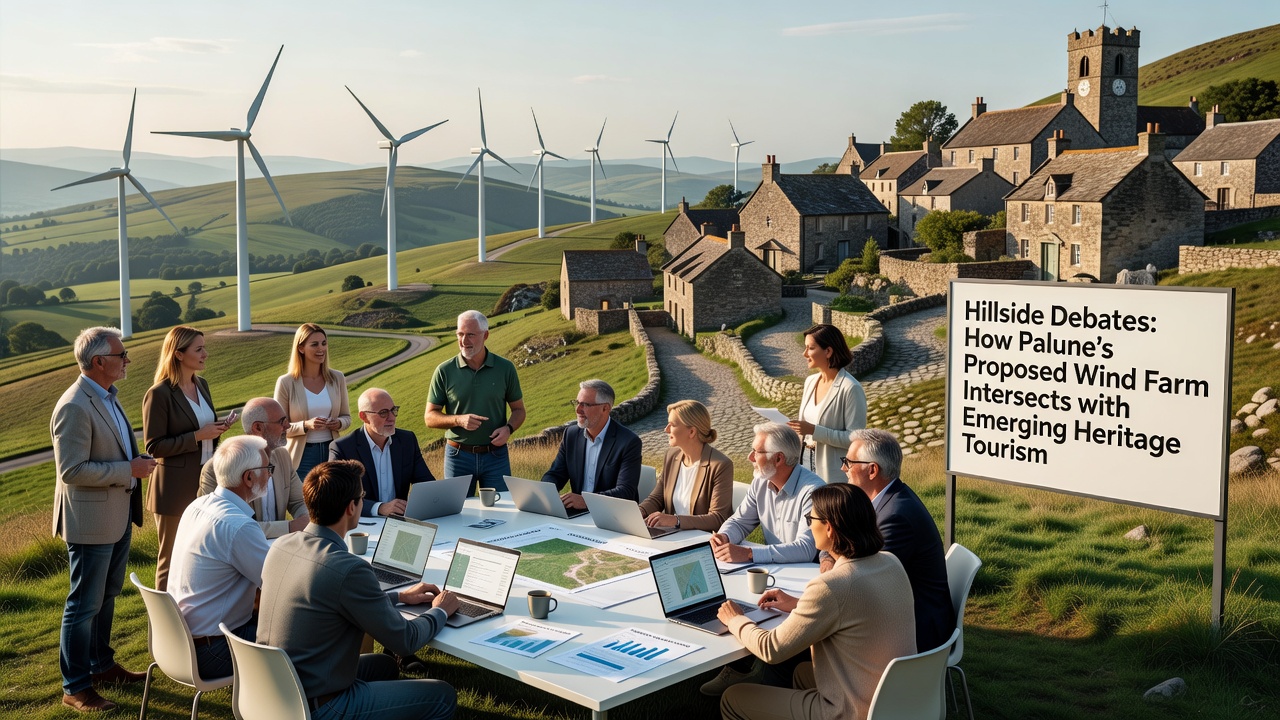
Hillside Debates: How Palune's Proposed Wind Farm Intersects with Emerging Heritage Tourism
Palune's hills have long supported both traditional agriculture and scattered heritage sites, yet recent proposals for a wind farm have drawn attention to how renewable energy projects might affect growing heritage tourism in the region. Data from regional planning documents indicate the project would install up to twelve turbines across elevated terrain that also hosts medieval ruins and walking trails popular with visitors. Researchers tracking tourism trends note visitor numbers to these sites rose by 18 percent between 2022 and 2025, driven by interest in Italy's lesser-known historical landscapes.
Project Details and Timeline
The wind farm application, submitted in early 2025, outlines turbines reaching 150 meters in height with a combined capacity of 36 megawatts, enough to supply electricity to approximately 25,000 households according to estimates from the Italian energy regulator. Project maps place several units within two kilometers of documented heritage locations including a 13th-century watchtower and associated dry-stone walls. Local authorities have scheduled a public consultation session for September 2026 to review visual impact studies and revised layout options that aim to maintain at least 1.5 kilometers between turbines and protected structures.
Heritage Tourism Growth Patterns
Heritage tourism in Palune centers on guided walks that highlight Roman-era remains and later medieval fortifications scattered across the hillsides. Figures released by the regional tourism board show overnight stays linked to these trails increased steadily after 2021, supported by new signage and digital mapping apps that promote lesser-visited routes. Observers note that many visitors cite the combination of open landscapes and visible history as the primary draw, creating economic activity for small guesthouses and local guides operating year-round.
Potential Overlaps and Planning Responses
Wind farm developers have submitted photomontages demonstrating how turbine placement could alter sightlines from key heritage viewpoints, while independent assessments commissioned by the municipality examine noise levels and shadow flicker effects on nearby trails. Studies conducted by university researchers in neighboring regions suggest that similar installations elsewhere in southern Europe produced mixed outcomes for tourism, with some sites reporting continued visitor growth when turbines remained visually separated from historic cores. In Palune the planning process now incorporates buffer zones and potential turbine height reductions to address these concerns before the September 2026 review.
Additional analysis from the European Environment Agency highlights how renewable projects in rural areas can coexist with cultural assets when site selection prioritizes existing infrastructure corridors rather than pristine ridgelines. One study of installations in Portugal found that heritage tourism revenue remained stable provided developers contributed to trail maintenance and interpretive centers. Palune officials have indicated similar mitigation packages may form part of the final approval conditions.
Comparative Examples from Other Regions
Experiences in Canada offer further context: reports from Natural Resources Canada document cases where wind projects near First Nations heritage areas incorporated Indigenous knowledge into layout decisions, resulting in adjusted turbine siting that preserved ceremonial sightlines. Australian research published through the University of Melbourne examined coastal wind farms and noted that heritage tourism operators adapted by developing new interpretive programs focused on the transition to clean energy, thereby extending visitor interest rather than displacing it. These examples inform ongoing discussions in Palune without prescribing outcomes for the local landscape.
Conclusion
Planning records show the September 2026 consultation will consolidate input from heritage groups, energy developers, and tourism operators before any final determination. Current data on both wind capacity targets and heritage visitor trends continue to shape the parameters under which the project may proceed, with layout adjustments remaining the central point of negotiation.